
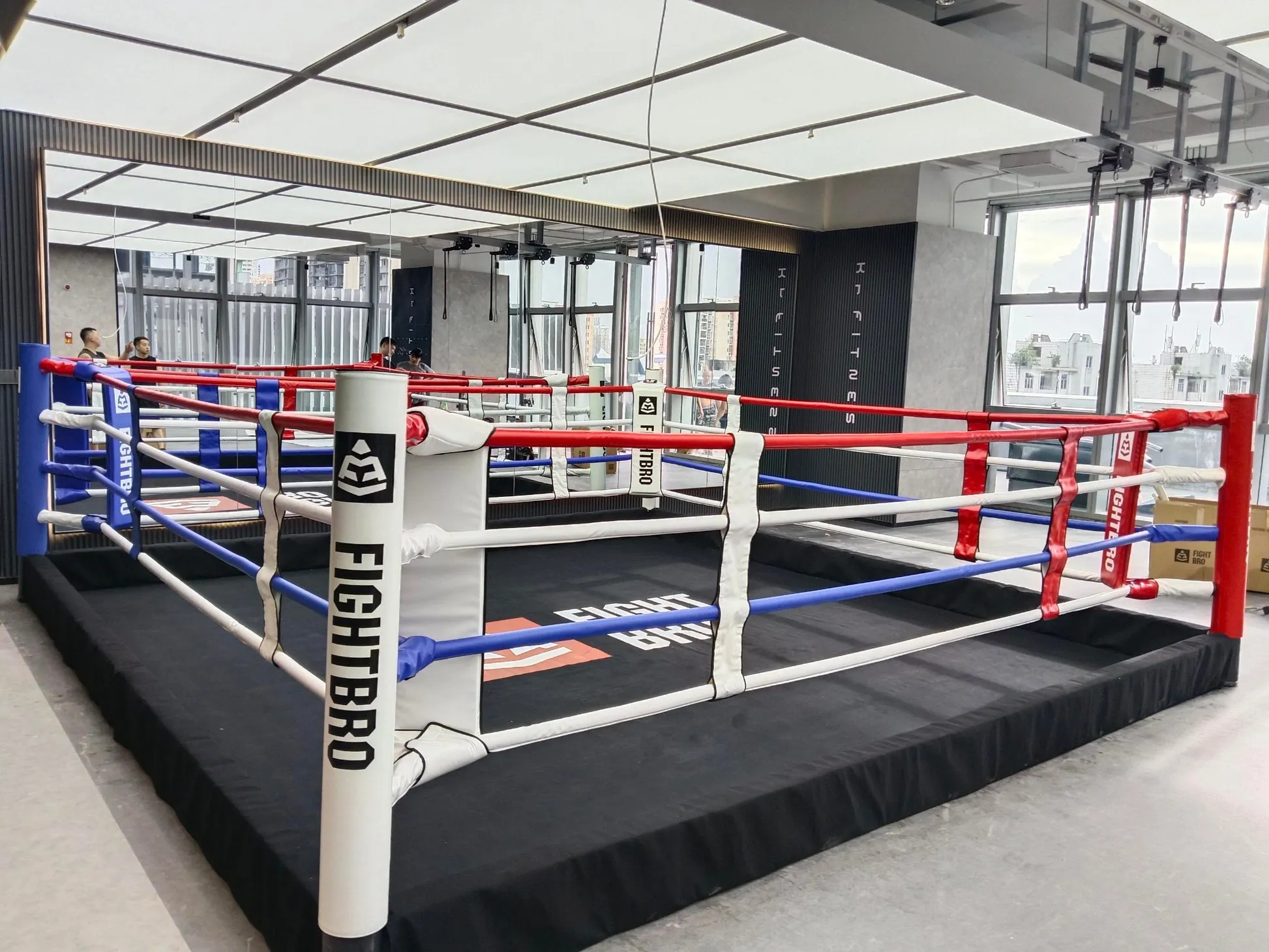
A boxing ring can become one of the most important pieces of equipment in a fight gym. It provides a dedicated environment for sparring, technical drills, footwork practice, and competition preparation. However, choosing the right ring involves much more than selecting the largest model that fits inside the building.
Gym owners need to consider available space, class structure, athlete level, installation type, maintenance, and plans. Understanding these factors before purchasing can help ensure that the ring supports daily training without creating problems elsewhere on the gym floor.
Start With Available Floor Space
The first step is measuring the actual usable area. Total building square footage can be misleading because offices, bathrooms, storage rooms, columns, and walkways reduce the space available for training. The boxing ring size should be considered alongside the amount of clearance required around the structure. Coaches need room to observe sessions, athletes need access to entry points, and staff need space for cleaning and maintenance.
Marking the proposed footprint on the floor before ordering can make it easier to understand how much room will remain for bags and other training zones.
Check the Complete Ring Dimensions
Owners should not focus only on the internal fighting area. Boxing ring dimensions also include posts, ropes, platform sections, stairs, and other structural components. A ring that appears suitable based on its internal measurements can occupy considerably more space once fully installed.
This becomes especially important in smaller commercial units. The ring should not block emergency routes, entrances, storage access, or commonly used pathways through the facility.
Match the Ring to Your Training Program
When selecting a boxing ring, owners should think about how frequently it will be used and by whom. Competition-focused gyms may need a more substantial setup because fighters regularly practice ring movement and sparring under realistic conditions.
A fitness-oriented boxing studio may not require the same configuration. The ring may primarily support demonstrations, controlled technical sessions, or occasional sparring. Choosing according to actual use is usually more practical than selecting a ring mainly for visual impact.
Consider a Foldable Option
Not every facility can dedicate a large area permanently to one structure. Smaller gyms often use the same floor for group fitness, bag training, private coaching, and technical sessions. A foldable boxing ring may be useful where flexibility is important. It can allow owners to adapt the room when ring training is not taking place. This type of setup can be particularly practical for multi-purpose studios where maintaining open floor space is important during certain classes or times of day.
Think About Platform Height
Boxing rings are available in different configurations, including elevated and lower-profile setups. Elevated rings can create a traditional competition appearance and clearly separate sparring from the surrounding training area.
Lower-profile arrangements may integrate more easily into a gym focused primarily on everyday coaching. Owners should consider ceiling height, access, stairs, surrounding clearance, and the athletes who will use the ring before choosing a platform configuration.
Plan the Canvas Carefully
The ring canvas affects both function and appearance. Commercial gyms should consider durability, cleaning requirements, and how often the surface will be used. A boxing ring canvas custom design can also help incorporate gym branding, sponsor logos, or event identity. For facilities that regularly create photographs or video content, the canvas can become a visible part of the gym’s overall presentation.
Branding should remain clear and relatively simple so that the training surface does not look overcrowded.
Consider Daily Class Flow
A boxing ring for gym use should fit naturally into the class schedule. If several athletes rotate through sparring sessions while other members work on heavy bags, the surrounding layout needs enough room for both activities.
Coaches should be able to move around the ring without crossing directly through other training stations. The location should also allow athletes to enter and leave the ring without blocking commonly used walkways.
Think About Long-Term Maintenance
Commercial rings receive repeated use. Ropes may require adjustment, canvas surfaces need regular cleaning, and padding or structural components should be inspected for wear. Owners should make sure all sides remain accessible for routine maintenance. Replacement components and eventual canvas changes should also be considered as part of long-term ownership.
A slightly more practical installation at the beginning can make maintenance significantly easier later.
Leave Room for Future Growth
The gym may eventually add more bags, expand its membership, introduce youth programs, or develop a larger competition team. Choosing a ring without considering these changes can lead to a crowded layout later. Leaving flexible space around the original setup gives owners more options as the facility develops. Future planning is particularly important when the ring will remain permanently installed.
Conclusion
Choosing the right boxing ring requires balancing dimensions, available floor space, training objectives, class flow, maintenance, and future growth. The largest or most elaborate option is not necessarily the most suitable choice for every commercial gym.
A carefully selected ring should support everyday coaching while fitting naturally alongside bags, conditioning areas, and other training equipment. By measuring the complete footprint, considering how athletes will use the space, and planning for long-term maintenance, gym owners can choose a setup that remains practical as their programs and membership develop.